

Hiring someone you have never met in person comes with a lot of guesswork, and a personality assessment is one of the tools companies use to take some of that guesswork away. You read the CV, you run the interviews, and the answers all sound right. Still, the same question lingers in the background. Will this person actually behave the way they present themselves once they are part of the team?
That question matters even more when the new hire sits in another country. For Australian companies building teams in the Philippines, it is not always easy to gauge how someone will handle pressure, collaborate with others, or settle into the workplace culture from a handful of video calls. This is where personality tests come in, promising to reveal traits and tendencies that a standard interview might miss.
The honest answer is that these tools are useful but not magic. They can point to patterns and likely behaviors, yet they cannot tell you exactly what a person will do in every situation. This article looks at how this kind of testing works, how accurate it really is at predicting behavior, and why it can still be a smart move for Australian companies hiring across borders.
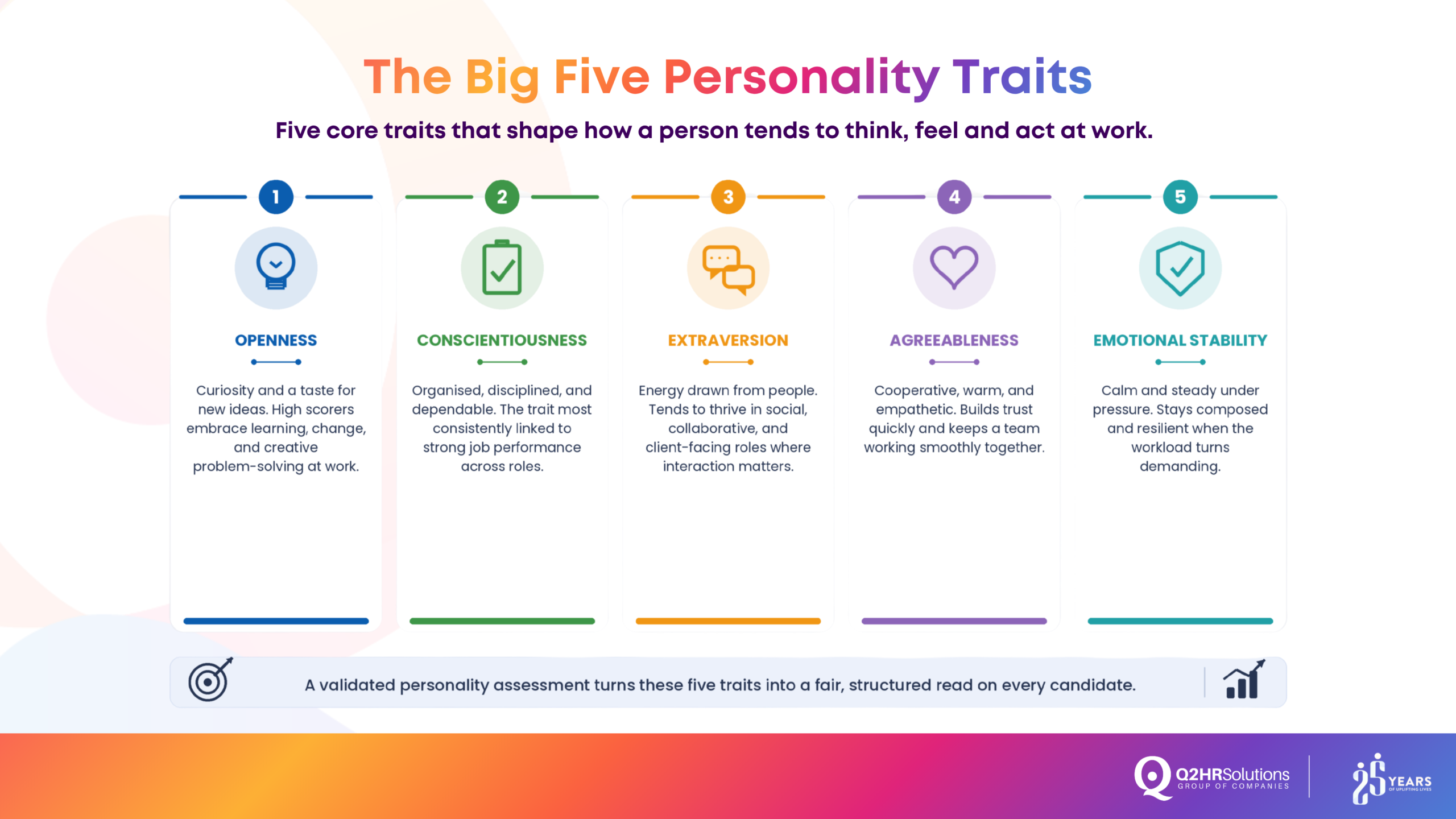
A personality assessment does not measure intelligence or technical skill. Instead, it looks at the stable traits that shape how a person tends to think, feel, and act at work. Most respected tools are built around well researched frameworks, with the Big Five model being the most widely accepted. It looks at five broad dimensions, namely openness, conscientiousness, extraversion, agreeableness, and emotional stability.
These traits are useful because they connect to real workplace behavior. Someone who scores high on conscientiousness, for example, tends to be organized and dependable, while a highly extraverted person usually thrives in roles that involve plenty of interaction. Good personality tests turn these tendencies into a structured profile compared to a vague gut feeling, which gives hiring teams something consistent to compare across candidates.
It helps to remember what these results really are. A profile describes how someone is likely to behave most of the time. It does not lock a person into a fixed outcome, and it certainly does not capture every part of who they are. Read properly, it is a guide rather than a verdict.
Accuracy depends almost entirely on the quality of the tool. A personality assessment built on solid research and validated against real performance data can somehow predict workplace behavior with a respectable degree of reliability. Decades of studies have linked traits such as conscientiousness to job performance across many different roles, which is why so many large organizations still trust this approach.
That said, no personality assessment predicts behavior with perfect certainty. People are shaped by context, mood, motivation, and the situation right in front of them. A calm and patient person on paper might still snap under a badly managed workload, and a reserved candidate might open up completely in the right team. Traits describe tendencies, not guarantees, so the results are best read as probabilities rather than promises.
The bigger risk comes from poorly built personality tests, the kind you find free online with no real science behind them. These can feel convincing while measuring almost nothing useful. Accuracy also drops when a profile is used in isolation, which is why the smartest hiring teams treat it as one input among several, sitting alongside interviews, reference checks, and practical tasks.
For Australian companies expanding into the Philippines, the importance of accuracy are higher than usual. When you cannot sit across the table from a candidate, you lose many of the subtle signals that normally guide a hiring decision. A well chosen personality assessment helps close that gap by giving you objective insight into how a remote hire is likely to work, communicate, and respond to pressure.
Cultural context plays a part too. Workplace norms, communication styles, and expectations around feedback can differ between Australia and the Philippines, and a personality assessment that has been properly validated for the local workforce will read those traits far more accurately than a generic one pulled off the internet. Using the right instrument means you are comparing candidates fairly and drawing conclusions that actually hold up.
There is also a cost angle. A mismatched hire in another country is expensive and slow to unwind, especially once contracts, payroll, and onboarding are already in motion. Getting a clearer read on behavior before an offer goes out reduces that risk and protects the time and money already invested in the search.
This is where a local partner makes a real difference. Running a personality assessment is only worthwhile when the tool is properly validated, the results are interpreted by people who understand them, and the insights are matched to the realities of the Philippine workforce. Generic online quizzes rarely offer any of that.
Providers like Q2 HR Solutions offer psychometric and behavioral assessment services built for companies hiring in the Philippines, helping Australian businesses understand candidates well beyond the CV. Because the tools are validated for the local market and the results are reviewed by specialists, the profiles you receive are far more dependable than anything a free online test can produce. For a business expanding across borders, that dependability turns an unfamiliar hire into a much more confident decision.
Rather than leaving fit to chance, we help you screen for the traits that matter most to each role, so you can build a Philippine team that performs from the start and stays for the long term.
A well validated personality assessment can predict workplace tendencies with solid reliability, though it works best as one part of a wider hiring process rather than a standalone decision maker. No tool can promise exactly how a person will act in every situation.
Usually not. Most free personality tests are not validated against real performance data, so they can look convincing while telling you very little. For real hiring decisions, a professionally built and locally validated tool is far safer.
Yes. They can be administered remotely, and a local provider can make sure the tool and its interpretation suit the Philippine workforce, which keeps the results fair and relevant.
No. The strongest approach uses both. An interview captures things a profile cannot, while a structured assessment adds objective insight that a conversation alone often misses.
So how accurate are these tools at predicting behavior? Accurate enough to be genuinely useful, as long as it is treated honestly. A strong, well validated profile reveals real tendencies and gives hiring teams a clearer view of how someone is likely to work, but it describes probabilities rather than certainties and should never carry a hiring decision on its own.
For Australian companies building teams in the Philippines, that clarity is worth a lot. When you cannot meet candidates face to face, objective insight into behavior helps you hire with far more confidence and avoid the slow, costly job of unwinding a poor fit. Paired with solid interviews and proper checks, this kind of testing becomes a practical safeguard rather than a gimmick.
Whether you are making your first Philippine hire or scaling an established team, Q2 HR Solutions can help you put the right assessment tools to work. Book a consultation with our team today to see how our psychometric and behavioral assessment services can help you understand candidates more deeply, hire smarter, and build a Philippine workforce that lasts.