

A training needs assessment is a structured process for identifying the difference between the skills and performance employees have today and what they need to achieve their roles and business goals. In simple terms, it helps organizations determine what employees need to learn, who needs training, and why the gap exists.
Needs assessment identifies the gap between required and current performance, then examines the causes and possible ways to address it. Importantly, opm.gov notes that training is not always the best solution; some performance gaps may be caused by unclear expectations, processes, resources, or job fit.
For Philippine businesses, this distinction matters as organizations respond to changing technology, skills requirements, and labor market demands. The Philippine Statistics Authority reported that 1.53 million workers or 25% of employees in formal establishments with 10 or more workers received job-related training in 2023.
A training needs assessment helps businesses make training more targeted and useful instead of treating training as a one-size-fits-all solution.
A well-conducted assessment can help organizations:
The goal is not simply to provide more training. It is to provide the right training for the right people at the right time.
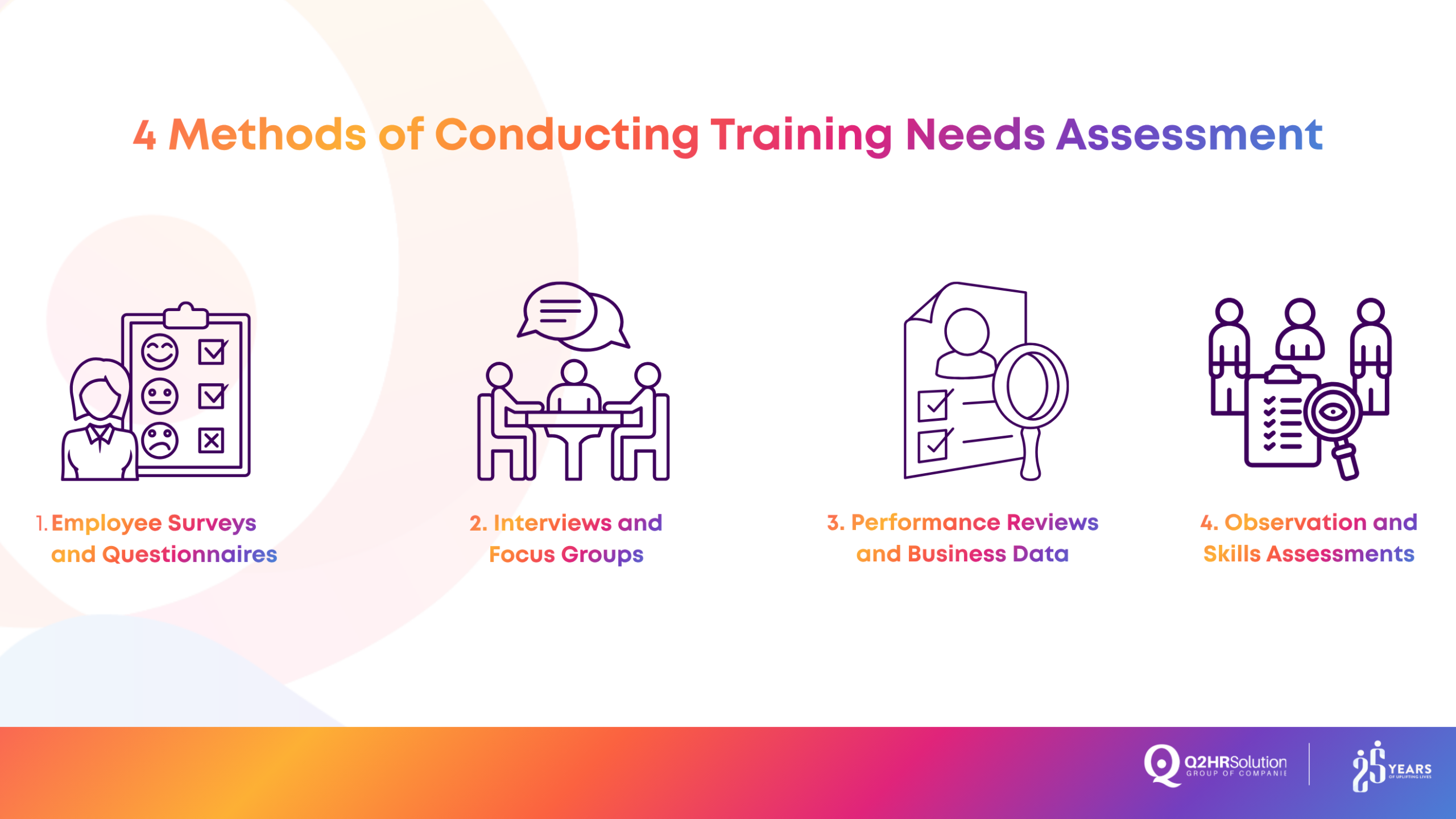
The best methods of conducting training needs assessment combine quantitative data with direct input from employees and managers. Using more than one method gives HR and L&D teams a clearer picture of what is actually happening.
Surveys help HR teams gather information about employees’ skills, confidence, challenges, and training needs across large groups.
However, self-reported responses should be supported by other evidence to identify the root causes of performance gaps.
Interviews with employees, managers, and stakeholders uncover challenges that surveys may miss. Focus groups help identify recurring issues across teams, making both methods useful for understanding why performance gaps exist.
OPM lists stakeholder interviews, focus groups, employee surveys, and document reviews among the approaches that can contribute to a comprehensive training needs analysis.
Company data can reveal performance gaps through:
Comparing current results with expected performance helps HR teams identify measurable gaps rather than relying on assumptions.
Observation reveals how employees perform tasks in real working conditions, while skills assessments measure proficiency against role requirements.
Both are useful for technical, operational, customer-facing roles.
There is no single best approach. The methods of conducting training needs analysis should depend on the problem being investigated. For example:
A strong training needs analysis should also examine the organization at three levels: organizational needs, job or task requirements, and individual employee capabilities. This prevents companies from jumping straight to a training solution before understanding the bigger picture.
Common methods include surveys, interviews, focus groups, performance data analysis, observation, and skills assessments. Combining methods helps identify employee and organizational needs more accurately.
A company should conduct an assessment before developing a major training program and whenever significant changes occur, such as new technology, new processes, regulatory requirements, new roles, or persistent performance problems. OPM recommends conducting a needs assessment before establishing a training and development program.
The terms training needs assessment and training needs analysis are often used interchangeably. Both generally refer to the process of identifying performance or competency gaps and determining how those gaps should be addressed.
No. A performance gap may result from insufficient training, but it could also stem from unclear expectations, inadequate resources, outdated processes, technology problems, or other organizational factors. A proper assessment should identify the cause before recommending training.
Effective methods of conducting training needs assessment connect employee capabilities with performance gaps and business objectives.
For Philippine organizations adapting to changing workforce requirements, this approach helps make training investments more focused and measurable. Instead of asking, “What training should we provide?” ask, “What performance problem are we trying to solve, and what is causing it?”
Need help aligning your workforce development efforts with your business goals? Contact Q2 HR Solutions to discuss your organization’s HR needs.
______________________________________________________________________________________________________________________________________________________________________________________
Expert Insights By:
Ynel Nazario is a contributor for Q2 HR Solutions and a Public Relations and Strategic Communications professional with 10 years of experience. She writes about human resources, global mobility, business, technology, and socio-economic trends, with a particular interest in translating complex topics into clear, accessible insights for readers.