


The outsourcing recruitment process involves partnering with an external provider to manage some or all hiring activities. Also known as recruitment process outsourcing (RPO), it gives businesses access to recruitment expertise without relying entirely on internal HR teams.
Depending on the agreement, an RPO provider may handle candidate sourcing, screening, interviews, assessments, and onboarding.
According to the Chartered Institute of Personnel and Development (CIPD), effective recruitment helps organizations secure the skills needed to meet current and future business objectives. Outsourcing can support this goal through a more structured hiring approach.
A structured process helps businesses identify, evaluate, and hire suitable candidates.
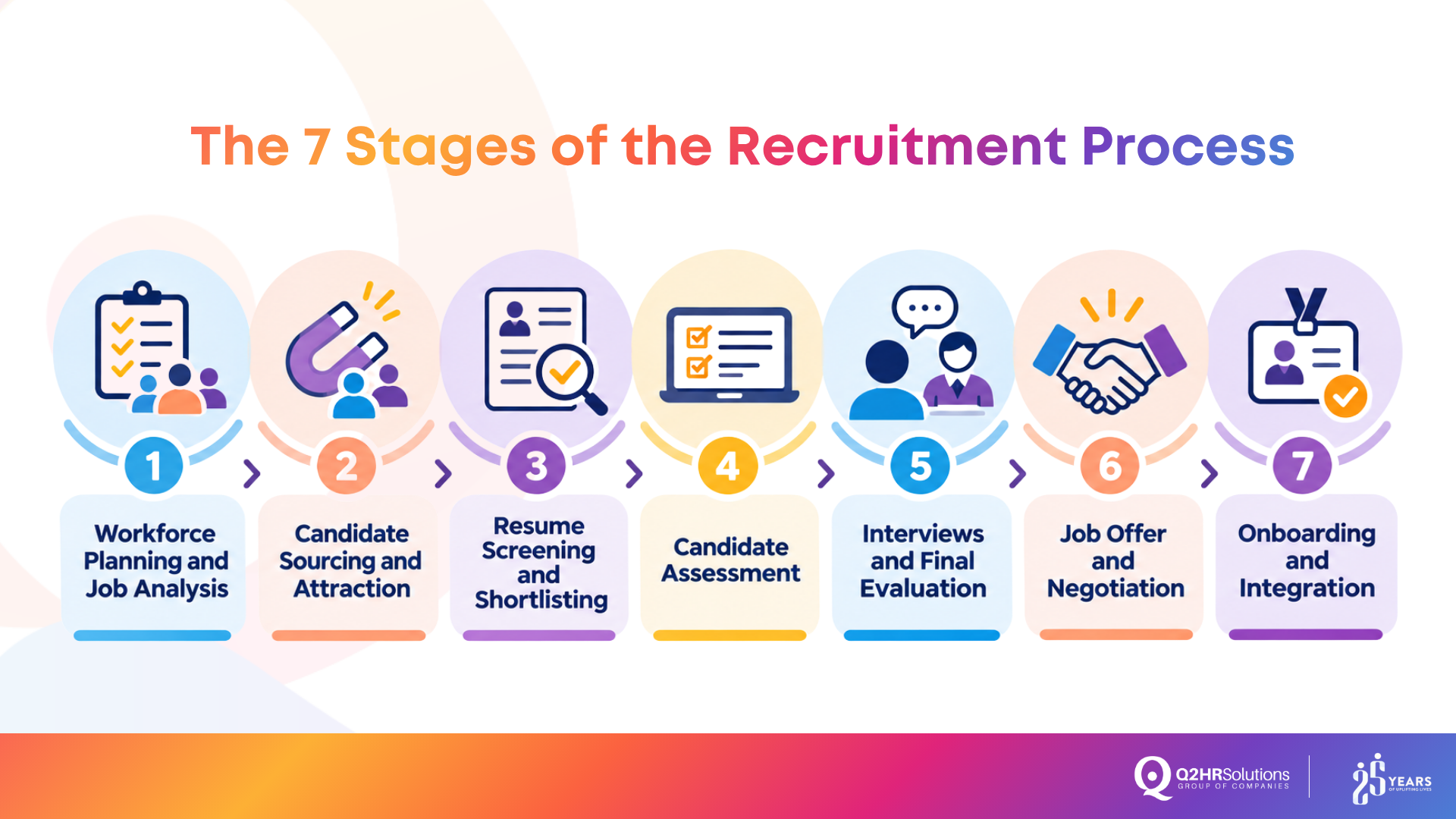
Recruitment begins with understanding the organization’s staffing requirements. HR teams and hiring managers identify skill gaps, define job responsibilities, establish qualifications, and agree on hiring timelines and budgets.
Clear requirements help recruiters focus on candidates who match the role.
Recruiters identify potential applicants through job boards, professional networks, employee referrals, talent databases, and other relevant channels.
An outsourced recruitment partner can expand access to qualified candidates, particularly when internal teams have limited sourcing capacity.
Applications are reviewed against the position’s requirements to identify candidates who meet the essential qualifications and experience criteria.
Recruitment tools can help organize applications, but screening criteria should remain relevant to the role and consistently applied.
Shortlisted applicants undergo appropriate assessments to evaluate their skills, knowledge, and job readiness. These may include technical tests, work samples, aptitude assessments, or practical exercises.
Businesses should also consider fairness and potential discriminatory effects when evaluating applicants.
Structured interviews allow hiring teams to compare candidates using consistent, role-specific questions and evaluation criteria. Reference checks and other relevant verification procedures may also be conducted.
An external recruiter can coordinate interviews, gather feedback, and help keep the hiring process moving.
Once the preferred candidate is selected, the employer presents the offer and discusses compensation, benefits, responsibilities, and employment terms.
Clear communication and timely approvals help reduce unnecessary delays and improve the candidate experience.
The final stage helps new employees transition into their roles. Activities may include completing employment documents, introducing company policies, arranging training, and establishing performance expectations.
A recruitment partner may support onboarding coordination, depending on the agreed scope of services.
Outsourcing recruitment helps businesses access expertise, streamline hiring, and manage changing workforce needs. Benefits may include:
However, outsourcing does not guarantee faster hiring or lower costs. Businesses should establish clear performance indicators, responsibilities, and communication procedures with their provider.
Businesses should consider outsourcing when hiring demands exceed internal capacity or require specialized expertise.
Common situations include:
Before choosing a provider, businesses should assess their hiring volume, budget, internal capabilities, and expected outcomes. Some need end-to-end recruitment support, while others only require sourcing or assistance with specific hiring projects.
The seven stages organize hiring from workforce planning to onboarding. An external recruitment partner can streamline sourcing, screening, and interviews, reduce administrative work, and help businesses find qualified candidates more efficiently.
Outsourcing recruitment can be cost-effective when it reduces administrative demands, provides specialized expertise, or supports high-volume hiring. Businesses should compare service fees with overall recruitment costs and expected results.
Recruitment outsourcing typically involves managing an agreed portion of the hiring workflow. Staffing agencies generally focus on sourcing and placing candidates for specific vacancies, although their services can overlap.
Outsourcing may help businesses fill multiple positions, expand quickly, find specialized talent, or support an overstretched HR team. Companies should evaluate their recruitment goals, budget, and required level of support before deciding.
The outsourcing recruitment process helps businesses strengthen hiring while allowing internal teams to focus on broader business priorities. Clear requirements, consistent candidate evaluation, and the right recruitment partner can support long-term workforce growth.
Q2 HR Solutions provides customized RPO services to support businesses with candidate sourcing, screening, and end-to-end recruitment.
Ready to make recruitment more manageable? Contact Q2 HR Solutions to discuss your hiring needs and explore a solution tailored to your business.
______________________________________________________________________________________________________________________________________________________________________________________
Expert Insights By:
Ynel Nazario is a contributor for Q2 HR Solutions and a Public Relations and Strategic Communications professional with 10 years of experience. She writes about human resources, global mobility, business, technology, and socio-economic trends, with a particular interest in translating complex topics into clear, accessible insights for readers.