


Building a team in another country sounds straightforward until the hiring process actually starts. What seems like a straightforward hiring effort quickly turns into questions about local labor laws, salary expectations, mandatory benefits, and finding qualified candidates in a competitive market. For many KSA companies hiring in the Philippines, that’s when they realize they need a more structured approach than the one they’re used to doing.
Breaking the journey into clear stages makes everything far easier to manage. A well-planned employment hiring process gives businesses a reliable way to attract, evaluate, and hire the right people without losing time or strong candidates along the way. It also helps Saudi companies stay compliant with Philippine employment rules, which is why many of them choose to work with an Employer of Record (EOR) while building their first local team.
This article walks through the five stages that make up a complete hiring journey, the challenges KSA companies should prepare for, and why working with a partner that handles both recruitment and EOR services can make the whole expansion far simpler.
For Saudi businesses entering the Philippines, hiring is rarely just about filling a seat. The local market moves quickly, talented professionals often weigh several offers at once, and the rules around employment differ from what companies are used to in the Kingdom. Treating recruitment as a casual, ad hoc task usually leads to delays, mismatched hires, and avoidable compliance risks.
A clear hiring process changes that. When every stage is mapped out, from defining the role to welcoming a new employee, businesses can move with confidence instead of guessing their way through unfamiliar territory. It also creates a better experience for candidates, who tend to remember how professionally they were treated even when they are not selected.
Understanding the structure of an employment hiring process matters even more when you are operating from another country. Without payroll, contracts, and statutory obligations handled correctly, even the best candidate can quickly turn into a costly problem instead of a valuable hire.
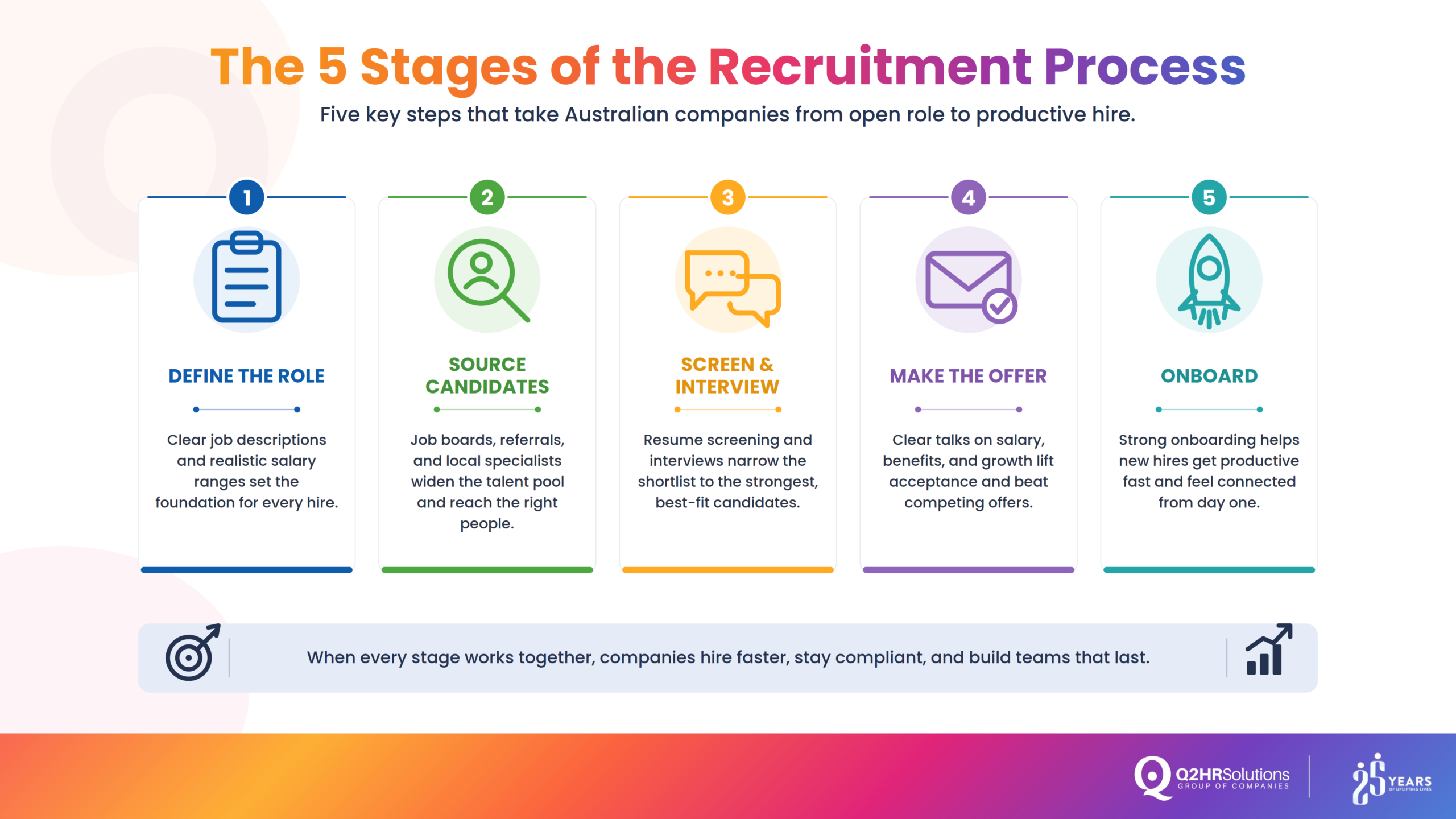
The first step is defining the role. Before searching for anyone, companies should know exactly what skills the position requires, what success looks like after a few months, and how the role supports the wider business. A detailed job description and a realistic salary range based on Philippine market rates give the search a strong foundation.
The second step is finding and attracting candidates. Most companies reach a wider talent pool by combining online job boards, professional networks, employee referrals, and local recruitment specialists who understand where Filipino professionals actually look for work. Employer branding plays a growing part here too, since candidates often weigh career growth, culture, and stability alongside pay.
The third step is screening and interviewing. Once applications arrive, employers review CVs and run initial interviews to narrow the shortlist by assessing technical ability, communication skills, and overall fit. Depending on the role, practical tests or behavioral interviews may follow before a decision is made. A consistent employment process at this stage keeps evaluations fair and comparable across every applicant.
The fourth step is making the offer. After choosing the preferred candidate, clear conversations around salary, benefits, work arrangements, and growth opportunities help secure acceptance and reduce the risk of losing the person to a competing offer. In a fast-moving market, a slow or vague offer is often the difference between hiring someone and starting the search all over again.
The fifth step is onboarding. The employment hiring process does not end once a contract is signed. Giving new hires the tools, guidance, and support they need from day one helps them become productive sooner and feel connected to the company. Strong onboarding also lifts engagement and long-term retention, which protects all the effort invested in the earlier stages.
The Philippine job market is competitive, especially for experienced professionals in technology, finance, customer service, and shared services. Skilled candidates frequently receive several offers at the same time, so a drawn-out process can mean losing strong applicants to faster-moving employers.
Differences in expectations add another layer of complexity. Salary structures, government-mandated benefits, hybrid work setups, and communication styles may not match what Saudi companies are used to. Raising these points early in the employment process helps prevent misunderstandings later, and it keeps both sides aligned before any offer is made.
Compliance is the challenge that catches most newcomers off guard. Philippine labor laws cover contracts, statutory contributions, leave entitlements, and termination rules that are often unfamiliar to first-time entrants. Getting these wrong can be expensive, which is exactly why local guidance is so valuable during a cross-border hiring process.
For most KSA companies, hiring in the Philippines involves far more than finding the right people. Once recruitment ends, the work shifts to employment contracts, payroll, statutory contributions, benefits administration, and ongoing compliance. Handling all of that through separate vendors adds complexity, particularly for businesses without a local entity.
This is where working with a partner that offers both recruitment and Employer of Record (EOR) services pays off. Instead of juggling multiple providers, companies can source, hire, onboard, and manage employees through a single relationship, turning a fragmented hiring process into one smooth journey from first application to first payslip.
Providers like Q2 HR Solutions bring years of recruitment expertise together with comprehensive EOR service to support KSA companies through every stage of the hiring process. From sourcing and evaluating candidates to legally employing talent through our EOR services, we help businesses expand into the Philippines faster while reducing paperwork and staying compliant with local regulations. Rather than simply filling open roles, we provide ongoing support so teams can keep growing with confidence as hiring needs change.
The hiring process can take a few weeks for most roles when decisions are made promptly, though senior or highly specialized positions often need more time to fill.
Yes. An Employer of Record can legally employ staff on behalf of overseas businesses, letting Saudi companies build a Philippine team without first registering a company there.
Local partners understand salary expectations, candidate behavior, and sourcing channels that overseas employers may not, which keeps the whole journey faster and far more accurate.
Recruitment focuses on finding and selecting the right candidates, while an Employer of Record manages the legal side of employment, including contracts, payroll, government contributions, and compliance. Many businesses use both together.
Hiring in the Philippines gives KSA companies access to a deep pool of skilled, English-proficient talent, but lasting success depends on far more than filling vacancies. A clear, well-structured approach, supported by local market knowledge, helps businesses attract the right people, avoid costly delays, and build teams ready to grow alongside the business.
As your operations expand, recruitment and compliance should move together. Finding great candidates is only the beginning. Contracts, payroll, statutory benefits, and labor law all shape whether your expansion runs smoothly. A partner that understands both talent and Employer of Record (EOR) services makes the shift from hiring people to building a fully compliant workforce far easier.
Whether you are planning your first Philippine hire or scaling an existing team, Q2 HR Solutions is ready to support you at every stage. Get in touch with our team today to see how our recruitment and EOR expertise can help you hire smarter, expand faster, and grow your workforce in the Philippines with confidence.